Google November 2026 Core Update: What Website Owners Need to Know





Table of Contents
Imagine opening Google Search Console on a Monday morning and seeing fewer clicks than usual. Your first reaction might be to blame an algorithm update. On November 10, 2026, Google did begin rolling out a new broad core update, so it is understandable that website owners are paying attention. But a traffic dip and a confirmed penalty are two very different things.
The November 2026 Core Update is relevant to businesses in Chennai and everywhere else because it applies globally, across all languages. That does not mean every website will lose rankings. Some pages may move up, some may move down, and others may see little difference. The useful response is to understand the confirmed facts, inspect your own data and avoid rushed changes while the rollout is in progress.
Editorial status check: November 22, 2026. Google’s official dashboard confirms the release; a completion announcement was not available in the official entry checked for this article. Recheck the Google Search Status Dashboard before relying on the current rollout status.
What Is the November 2026 Google Core Update?
A core update is a broad change to Google’s search ranking systems. It is intended to help Google deliver useful and relevant results across many kinds of searches. Rather than being a manual punishment aimed at a particular website, it changes how pages may be assessed relative to other pages for a search.
Think of it like a bookstore rearranging its recommendations after reviewing more books. A book that previously occupied the first shelf might move, even if the book itself has not become bad. A website’s movement after a core update can happen for similar comparative reasons. Google explains that some sites may experience a change without having violated its spam policies.
The important distinction: a core update is not proof that your website has been penalised. If rankings move, start with evidence from your pages and queries before deciding what needs to change. Read Google’s core update guidance for the official explanation.
November 2026 Core Update: Release Date and Rollout Status
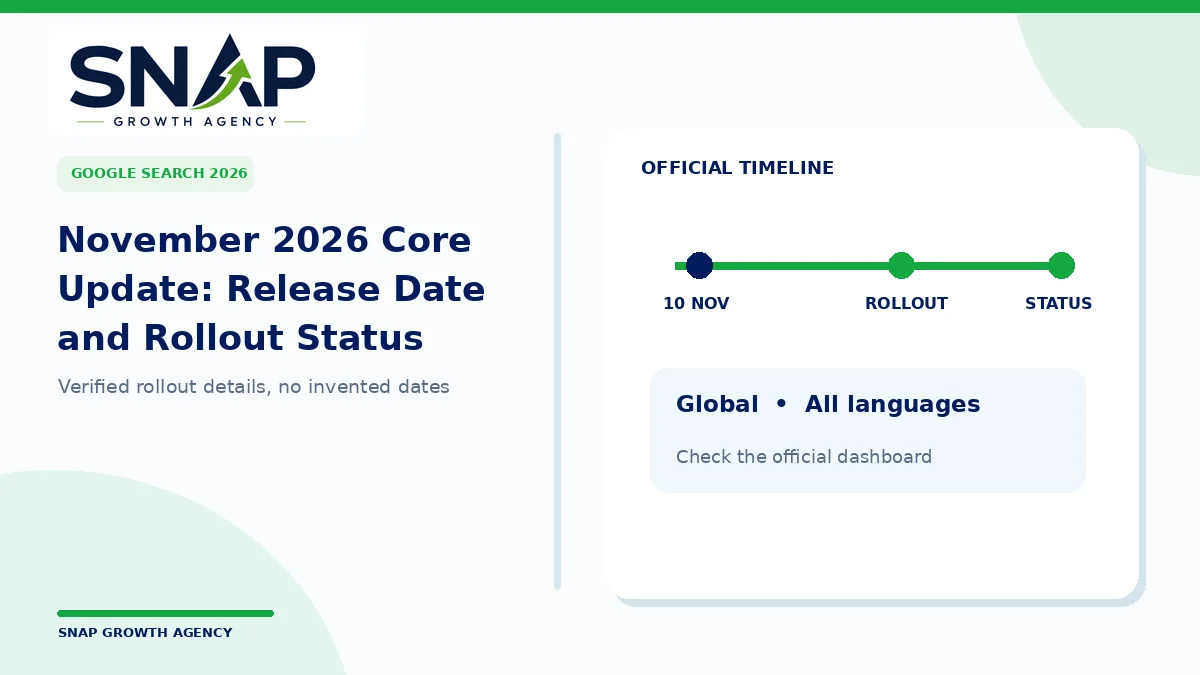
Google recorded the November 2026 Core Update as starting on November 10, 2026, at 10:06 AM US/Pacific. Its announcement said the rollout applied globally and to all languages and could take up to two weeks to complete. The dashboard entry reviewed on November 22 did not yet provide a confirmed completion date.
| Detail | Officially confirmed information |
|---|---|
| Update | November 2026 Core Update |
| Start date | November 10, 2026 |
| Start time | 10:06 AM US/Pacific (18:06 UTC) |
| Geographic reach | Global |
| Languages | All languages |
| Expected duration | Up to two weeks |
| Completion | Not confirmed in the dashboard entry checked on November 22, 2026 |
You can follow the official Google Search Status Dashboard incident for any new status entries. A predicted completion date is not the same as an official completion notice. This article should be updated when Google publishes that notice.
Why Does Google Release Core Updates?
People search for everything from medical information and local repair services to product comparisons and complex technical guidance. Google’s systems need to keep assessing which pages are helpful for those different questions. Core updates are part of that ongoing work.
Google does not publish a detailed list of precise scoring changes for each broad core update. That matters when you see confident claims about a brand-new ranking factor. A statement such as “the November update now rewards exactly this content length” should be treated carefully unless Google has actually confirmed it.
For a business website, the sensible lesson is not to chase a supposed secret formula. Make the information clear, useful and accurate. Show what your business offers, explain important decisions and make it easy for someone to take the next step. Those are worthwhile improvements even when there is no core update.
What Changed in Google Search Rankings?
A broad core update can change the order of search results, but the effect is not uniform. One article may gain visibility while another loses clicks. A homepage may remain stable while a particular service page moves. Search demand itself can change at the same time, which makes simple explanations risky.
Look beyond a single keyword position. In Search Console, check whether impressions changed, whether clicks fell more sharply than impressions and which pages account for the difference. A decline in clicks with steady impressions might point you towards changes in result appearance or click-through behaviour. A decline in impressions across several important queries may suggest a visibility change worth examining.
These are diagnostic clues, not proof of one algorithm mechanism. Compare like-for-like periods and check the exact searches involved. Do not treat temporary movements during rollout as the final result.
Which Websites May Be Affected?
Because the update is global, sites from many industries can experience ranking changes. That includes company websites, blogs, publishers and online shops. But Google has not said that this specific release targets an individual platform such as WordPress or a particular business category.
A local service business might find that a competitor’s more detailed service page appears above its own. An e-commerce store might notice changes for a product category. An educational publisher might see movement across informational queries. Each example calls for a different review of the page’s relevance and usefulness.
For Chennai businesses, it is especially important to distinguish organic website listings from Google Maps business results. Local visibility is shaped by additional factors, and not every Maps change can be attributed to a broad core update. Look at the individual search surface before drawing conclusions.
How to Check Whether Your Website Was Affected
First, make sure you are investigating the right time period. Google recommends waiting at least a full week after a core update finishes before using Search Console for a more reliable comparison. You can monitor while it rolls out, but avoid declaring a permanent loss during the rollout.
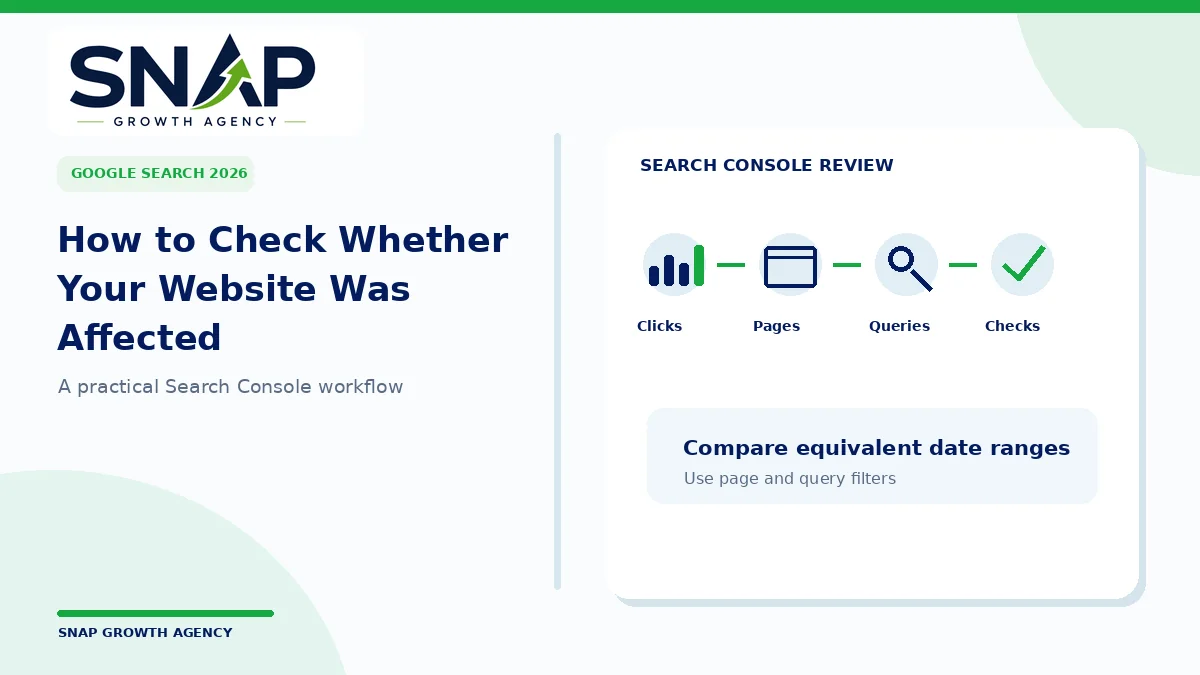
Open Google Search Console, select the correct property and go to Performance → Search results. Compare equivalent date ranges, ideally the same days of the week. Look at total clicks and impressions, then switch to the Pages tab to find where the biggest changes happened. The Queries tab can tell you whether important commercial searches changed or whether the decline is concentrated in unrelated informational topics.
Check the following in sequence:
- Confirm Google’s official rollout dates and the date of your traffic change.
- Look for an unusual pattern rather than judging one day’s numbers.
- Segment by Pages and Queries to find the affected part of the website.
- Compare Web Search separately from Image, Video or News performance.
- Review country and device filters where they are relevant.
- Check indexing, server uptime, redirects and analytics tracking before blaming rankings.
- Record your findings and revisit them after the rollout and comparison window.
For example, an illustrative service page might show 120 clicks in one seven-day period and 82 in the next. That alone is not enough to diagnose a core update. You would also want to inspect impressions, queries, position changes and whether those weeks had comparable demand. Google’s traffic-drop troubleshooting guide offers a useful framework.
What to Do If Your Website Rankings Drop
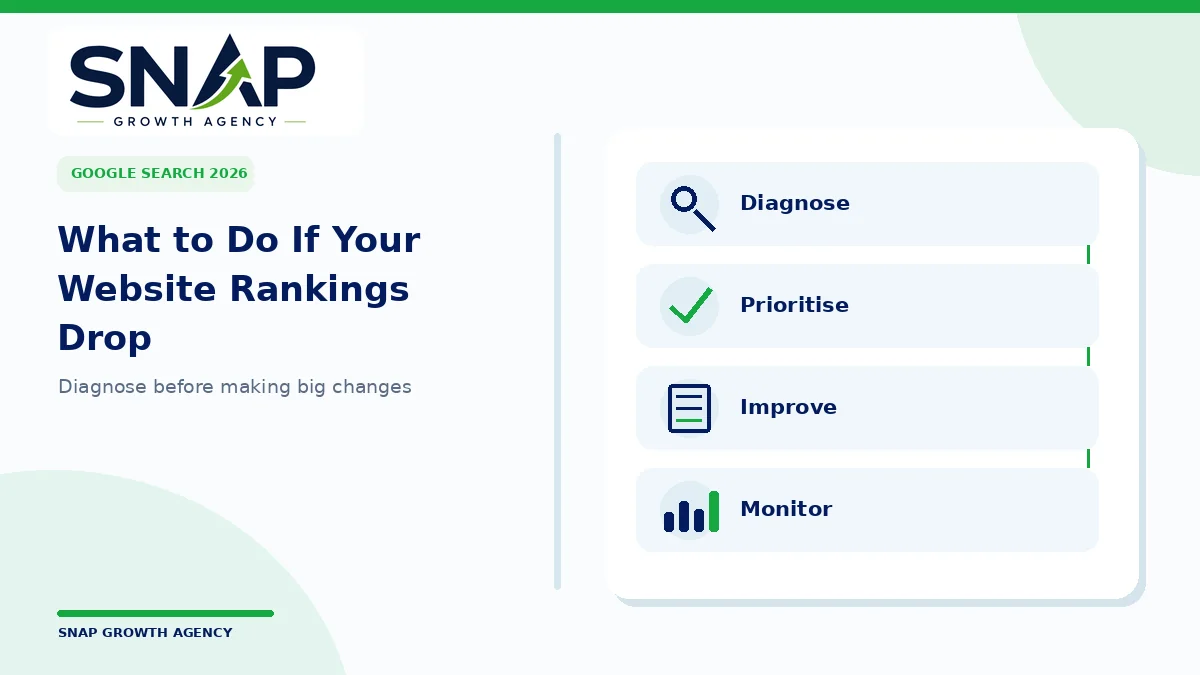
Start by checking whether a real issue needs immediate attention. If a page accidentally became noindex, a server stopped responding or an important redirect broke, fix that technical problem without waiting. Those faults are different from broad ranking reassessment.
If technical checks are clean, review the pages that lost meaningful visibility. Read them as a potential customer would. Does the page answer the search clearly? Is the information current? Does it give enough detail to make a decision? Can the visitor easily find the next step? A service page with a vague introduction and little useful detail may benefit from clearer explanations, examples and accurate business information.
Avoid changing everything at once. Prioritise a few important pages, document what you improve and give the changes time to be processed. Google advises focusing on meaningful improvements rather than quick fixes made solely because rankings moved. If you need help investigating underlying issues, a structured SEO review from SNAP Growth Agency can provide a starting point.
SEO Mistakes to Avoid During a Google Core Update
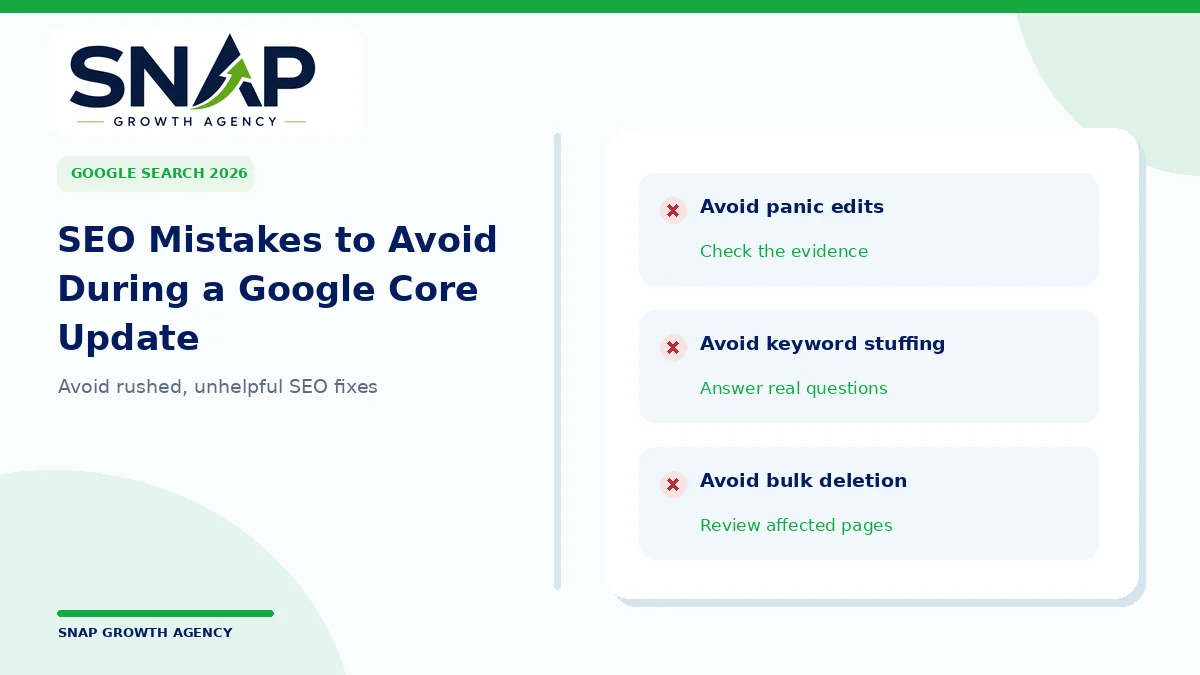
The most expensive mistake is to treat an uncertain diagnosis as a certainty. Deleting dozens of pages because traffic dropped for a week may remove useful information and make later comparisons more difficult. Changing every page title at once can create the same problem: you no longer know which action mattered.
Be cautious about buying large backlink packages, adding the same keyword repeatedly or publishing hurried articles that say little beyond what is already available. These approaches do not solve the underlying question of whether a page is useful to the people searching for it.
Do not rely solely on an SEO tool’s volatility score, either. Industry trackers are helpful for identifying broad patterns, but they do not explain what happened to your individual business. Search Console evidence, technical checks and a careful page review are more useful for deciding what to do next.
Does the November 2026 Core Update Target AI Content?
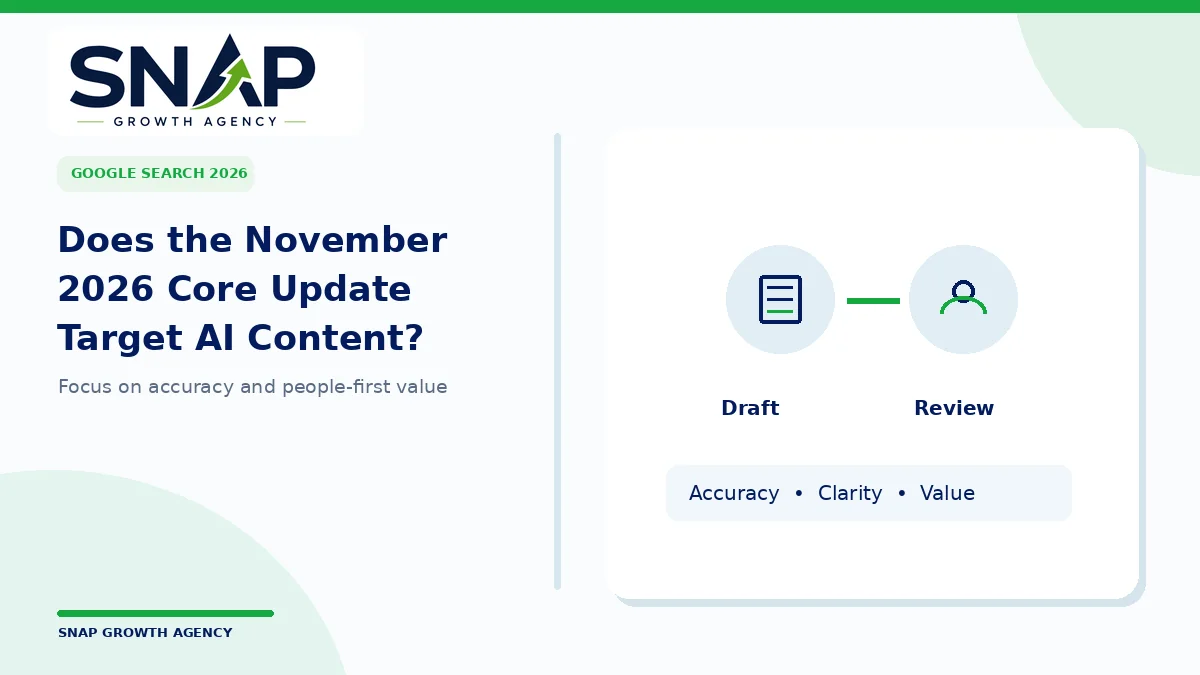
There is no confirmed official announcement in the sources checked saying that this November core update introduced a blanket penalty for AI-generated text. Google’s published guidance focuses on content usefulness and quality, rather than treating the use of a particular writing tool as an automatic ranking violation.
That does not make every AI-assisted article useful. A page assembled from generic statements, invented statistics or unverified advice can disappoint readers regardless of how it was created. Human-written pages can have the same problems.
A sound editorial process includes checking facts, adding genuine understanding, explaining decisions and reviewing the finished page for clarity. If AI tools are part of your workflow, use them to support research and drafting without skipping editorial responsibility. See Google’s people-first content guidance for the broader principles.
How Long Does Recovery from a Core Update Take?
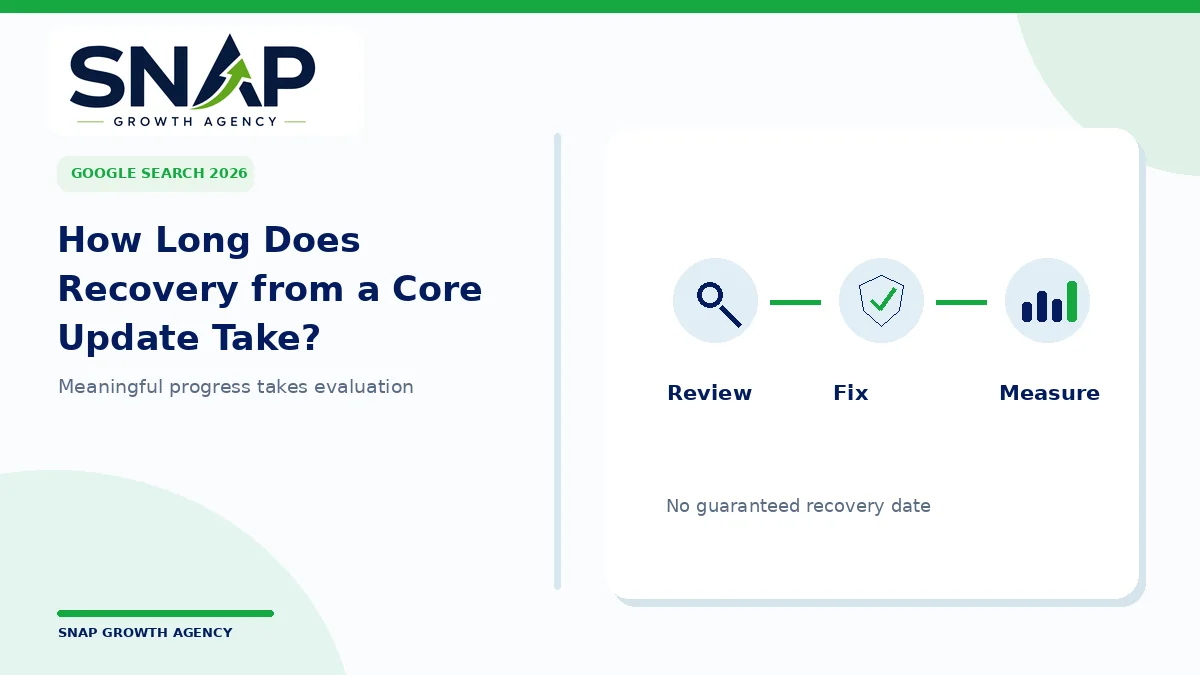
There is no universal recovery deadline. Some improvements may be reflected after pages are recrawled and Google’s systems reassess them. Larger changes in performance can take longer, and not every decline represents a problem that can be reversed with one edit.
Think in stages rather than promised timelines. First establish what happened. Then fix definite technical issues, improve genuinely weak content where appropriate and monitor results over a meaningful period. Do not assume the next ranking change will happen on the date an agency gives you.
Google’s current core update documentation notes that meaningful improvements can be reflected without waiting for the next major core update. That is encouraging, but it is not a guarantee of a specific position or completion date for your website.
Complete SEO Checklist After the November 2026 Update
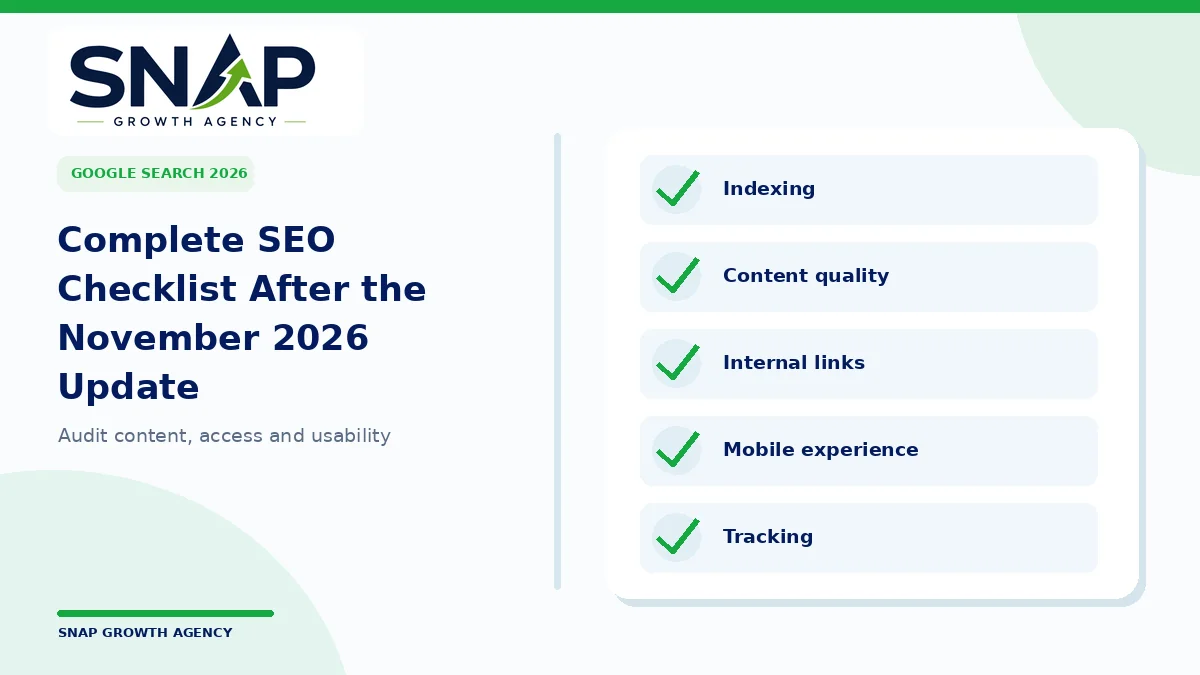
A practical audit does not start and end with keyword positions. It also checks whether search engines can access the important pages and whether visitors can use them.
- Search Console: Review affected pages, queries, impressions and clicks after a suitable comparison period.
- Indexing: Confirm your priority URLs are accessible and eligible to appear in search.
- Canonical URLs: Check that canonical signals match the preferred versions of your pages.
- Site structure: Make important services easy to find through navigation and contextual internal links.
- Content: Fix outdated facts, incomplete explanations and pages that fail to address the visitor’s question.
- Mobile experience: Test navigation, readable text and working enquiry forms.
- Structured data: Use only accurate markup relevant to the visible page content.
- Tracking: Confirm analytics events and lead forms still work before judging business impact.
These are general SEO fundamentals, not new ranking factors uniquely announced for the November update. A sound website development foundation can make these ongoing checks easier.
What Chennai Businesses Should Know
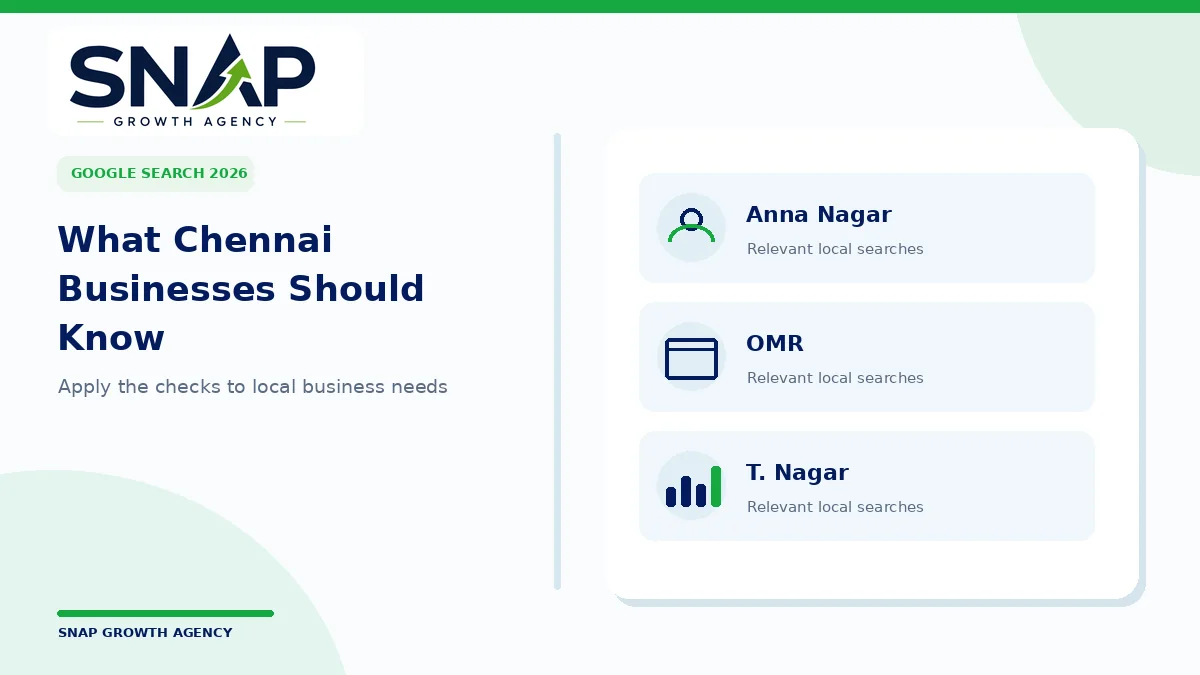
Consider three hypothetical examples. A dental clinic in Anna Nagar notices fewer visits to its dental implants page. It should compare the affected queries and inspect competing pages, not assume the clinic has received a penalty. A real estate business promoting a project near OMR may want to check whether individual project pages lost visibility while brand searches remained stable.
A retailer in T. Nagar could find that product category pages changed while its Google Business Profile still brings local enquiries. That is a useful distinction: different channels may behave differently even when they serve the same business.
The right response depends on what customers were searching for, which pages changed and whether enquiries actually fell. Chennai location references can make a page more relevant when they reflect real services, but repeating neighbourhood names without useful information is not a strategy.
How SNAP Growth Agency Can Help Review SEO Performance
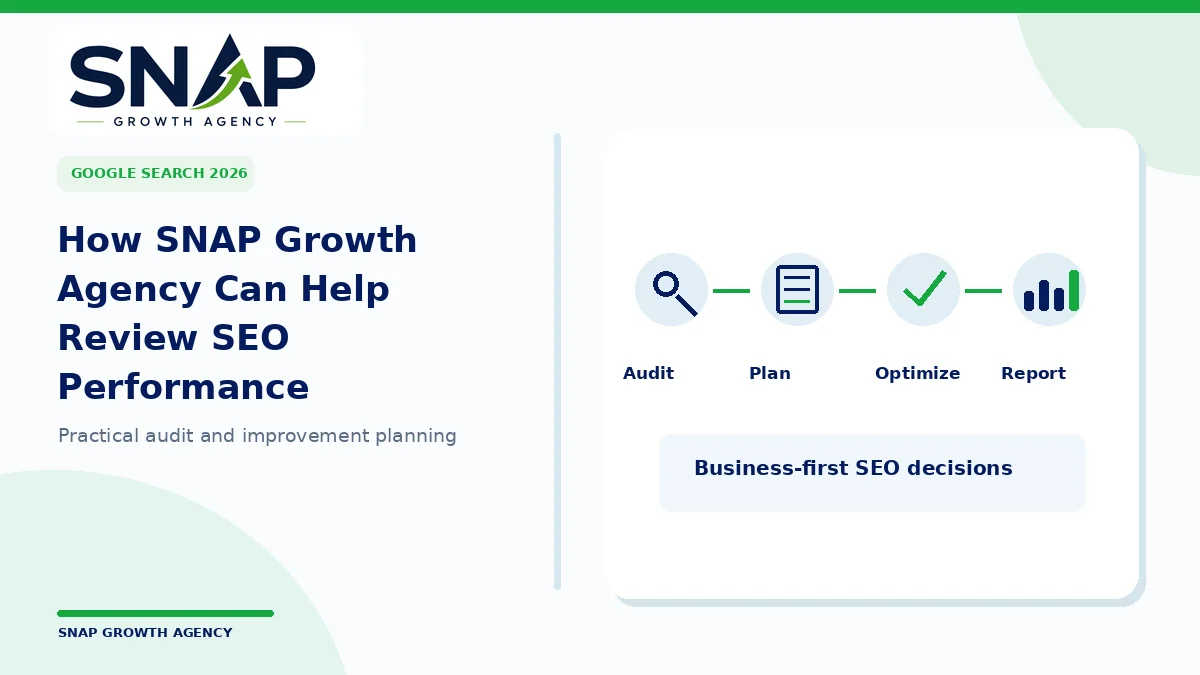
For a business owner, it can be difficult to separate ranking changes from technical issues, tracking gaps or normal demand fluctuations. A clear SEO review should bring those pieces together and explain the findings in language the business can act on.
SNAP Growth Agency’s SEO services include search visibility analysis, audits, on-page and technical recommendations, content optimization and related website work. The starting point should be your own website, its important services and the quality of enquiries it needs—not a promise that one update can be “beaten” with a secret tactic.
If you are a smaller business building your online presence, the agency’s guide to SEO services for small businesses provides additional context. You can also review how to approach Google rankings before making decisions based on one week’s performance.
Final Thoughts
The November 2026 Core Update is real, global and relevant to search visibility, but a traffic movement does not automatically mean your website has done something wrong. Google’s confirmed announcement tells us when the rollout began, not exactly why every individual page will rise or fall.
Check the official status, monitor your own search data and keep routine technical problems separate from algorithm-related changes. Once enough post-rollout data is available, focus on the pages that matter to customers and improve them for clear, defensible reasons.
Concerned about your website’s Google rankings? Contact SNAP Growth Agency to discuss a practical SEO review. A proper diagnosis is more useful than a guaranteed recovery claim.
Frequently Asked Questions
When did the November 2026 Core Update begin?
Google records the rollout start as November 10, 2026, at 10:06 AM US/Pacific. The official Search Status Dashboard is the source of record.
Is the November 2026 Core Update complete?
The official dashboard entry checked on November 22, 2026, did not yet confirm completion. Recheck the incident page for the latest official status before making a final post-rollout comparison.
Can a core update cause Google rankings to fall?
Yes, some pages can lose visibility while others gain. A decline is not automatically a manual penalty or evidence of a policy violation.
How can I tell whether my website was affected?
Use Google Search Console to compare equivalent date ranges, identify affected pages and queries, and rule out technical or tracking problems. Google’s guidance recommends waiting a full week after rollout completion before a reliable comparison.
Should I rewrite every article immediately?
No. Review the evidence first. Improve pages with genuinely weak, outdated or incomplete information rather than applying broad changes without diagnosis.
Does the update specifically penalise AI-generated content?
Google has not confirmed a blanket AI-content penalty specific to this update in the sources checked. Evaluate content for accuracy, usefulness and reliability, whatever tools were used to produce it.
How long will SEO recovery take?
There is no guaranteed recovery period. Improvements and reassessment can take time, and changes in search performance may reflect several factors.
Can an SEO agency guarantee recovery or number-one rankings?
No. A credible agency can audit your site, recommend sensible improvements and track results, but it cannot guarantee Google’s rankings.
Concerned About Your Website's Google Rankings?
Start with a careful SEO review. SNAP Growth Agency can help you investigate search performance, technical health and content opportunities without promising guaranteed rankings.